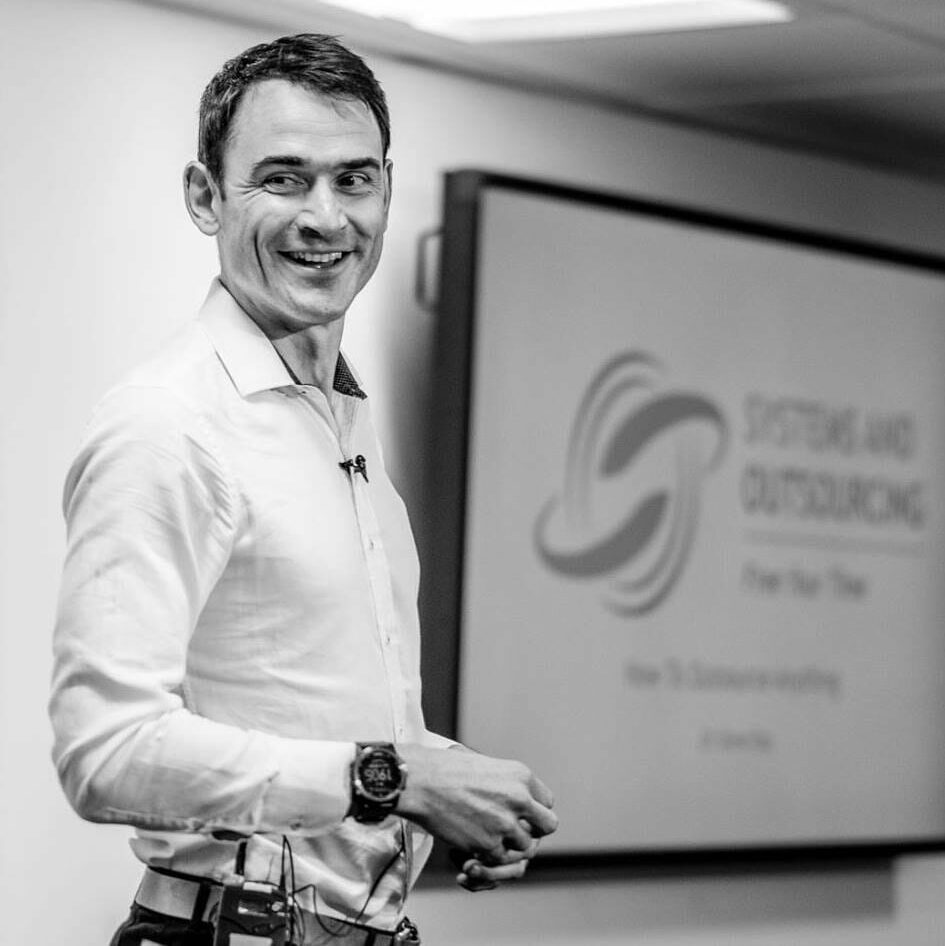
As AI does more of the work, human connection may just become your most powerful competitive advantage.
A few years back, I got AI to write a whole podcast episode and read it back to me.
ChatGPT scripted it. Descript read it out loud.
I sat there doodling on my phone while it did.
Nothing was wrong with it. That's the odd bit.
It was accurate. It was useful. Every point held up.
It just had nothing in it.
No connection. No me.
You've probably been tempted yourself. Hand the writing to AI – it's faster, and it's easier.
And I'm all for that – up to a point.
AI does plenty for me now, and I'd not go back.
It drafts, it runs my reports, it answers the questions I'd otherwise sit and dig through.
Automation handles the rest. The CRM, the calendar, the reminders.
But hand it the thing only you can do – reading a room, knowing when someone's struggling, sounding like yourself – and it doesn't work.
I got into this with Si Elliott this week.
25 years in marketing and behavioural science.
His line stopped me: If you take the human out of the originating work, why does Steve exist? It's not really Steve anymore.
He used surgery to explain it.
A robot operating on you under anaesthetic is fine, if it's steadier than a tired surgeon.
But when you come round – groggy, sore, not sure where you are – that's the moment you want a person. A hand on the shoulder. Someone who clocks that you're scared.
That's the bit of your work worth protecting.
Not the admin. The human bit.
It shows up in small ways too.
Si pointed out that I lit up talking about a client who's been with me seven years, and barely moved describing my best-ever sales year.
That told him everything about what the work is actually for.
We got onto customer experience from there.
If a customer's confused, that's never their fault. It's yours.
Nearly always because you never set the expectation.
Si’s rule is: set it, manage it, then beat it. In that order.
Miss the first step, and people invent their own expectation, and it'll be one you can't meet.
One of my favourite conversations this year.
Have a listen – a good reminder that the human bit is the point.
KEY TAKEAWAYS: Human Connection, Better Systems, and Sustainable Success
- Systemise to Make Time To Be More Human: Use AI and automation to remove admin so you can spend more time in high‑empathy, high‑value conversations with clients.
- Design Experiences, Not Just Funnels: Map the full customer journey and then look for small, compounding improvements that reduce effort and stress at each touchpoint. The easier you make things for them, the better.
- Protect Your Energy: Setting clear, honest expectations about access, timelines, and the level of support you offer protects your energy and also creates happier, more trusting clients.
- Success on Your Terms: Define success as a blend of impact, relationships, and lifestyle. Then build systems that serve that definition, not just revenue growth.
BEST MOMENTS: Insights on Human Connection and AI
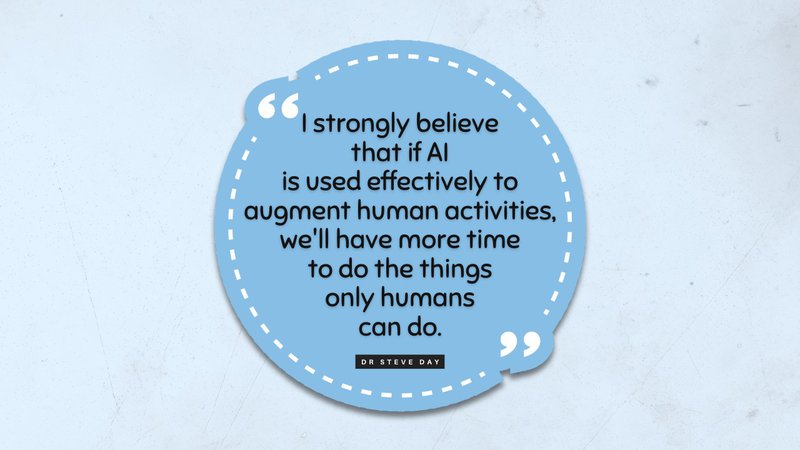
07:01 – 💬 “AI amplifies human connection rather than takes it away … systemisation does the same thing.” – Steve Day
10:45 – 💬 “If you take a human entirely out of the process – why does Steve (or you) exist?” – Si Elliott
19:45 – 💬 “Simplicity is the brain's best friend.” – Si Elliott
30:30 – 💬 “Sometimes we have to just stare into that. We're not for everyone, and I won't be for every customer. And that's fine.” – Si Elliott
TIMESTAMPED OVERVIEW
00:00 Intro: AI and human roles
08:10 Using AI to enhance human connection and systemise
24:05 Exploring behavioural science and behavioural economics in business
30:00 Customer service principles
45:10 Balancing work and life
Episode Transcript
Please note: This transcript was generated using automated transcription tools and may contain typographical errors or inaccurately captured words or phrases.
Dr Steve Day: Welcome to Systemize Your Success. I\'m Dr Steve Day. In today\'s episode, you\'re gonna hear a fascinating interview I had with a guy called Si Elliott. He\'s an expert in behavioral sciences. He\'s been running a marketing agency for about 26 years. All around using, human behavior and about experience and customer experience. And how do we improve all of those things through the applying science and through applying a huge amount of knowledge into that area.
What we discussed went far beyond that. We were talking a lot about AI, which is obviously the subject of the day at the moment. But about how human connection is affected by that both positively and negatively. And really focused down on some of the things that us two, as experts, believe are still absolutely human things that we should be doubling down on. When we can use AI to take care of so much stuff and automation, et cetera.
Like, what\'s left for us humans, and why is it so important to actually understand what those things are. To be able to make a bigger impact, to be able to reach more people, to be able to connect with more humans on a more human level. To scale our businesses and to be able to deliver more impact.
This is one of the episodes where it, I thought it was gonna be good, and it was better than my expectations. We talk a lot about expectations as well, so it\'s interesting that they came up then. Anyway, with that all said, I hope you enjoy this episode as much as I did recording it. Thanks very much.
Si, thank you very much for coming along today. What I\'d love to do is just kick off and find out a little bit about why you do what you do. First of all, explain what you do. But also why you do what you do. Because I think that from the subject of what we\'re talking about here, there\'s got to be a background story to some of this.
Si Elliott: Well, firstly, I\'m absolutely delighted to be joining you. And I\'m hoping to get as much out of you as you get out of me today as well. I\'ve probably got a ton of questions for you around systemization, your expertise.
What\'s my background? So I work in marketing. Did a business studies degree a long time ago, as you can tell from my appearance. And I\'ve been in the marketing industry now for 25 plus years.
I\'ve seen a lot of that evolution through the marketing industry as well. Some good, some bad. Technology has come in and really disrupted what we\'re doing. And I get the impression we\'ll probably talk about AI a little bit today as well. But that\'s really just accelerating things. And I guess for me, I\'m probably quite driven just to inspire people. Around human connection and relationship at a base level.
And marketing is the way that I obviously monetize that and pays the bills, and it\'s a great industry that\'s served me really well over the years. And I think human connection has felt like it\'s become more and more important over the last decade or so. There\'s been lots of big things that have happened.
We think about what happened during the COVID times. Where we lost connection, physical connection with each other for a length of time. And we look at the world of digital now, and we\'re more connected than ever before. But somehow people are reporting they\'re more lonely, they\'re more anxious. So something\'s not quite right at that human level.
And as marketeers and people in business, we have the capability really to make a difference in that space and to make a difference in people\'s lives. Be it through the businesses, the brands, the services that they connect to. And thinking about customer experience within that. So I\'m not someone who\'s gonna come on and go, \"Hey, I\'m an expert in Search Engine Optimization or paid media.\"
I look across the whole gamut of marketing, and really it is about building those connections with people, long-term relationships. And certainly the marketing industry now has got a real obsession with conversion metrics. And the easy things you can measure, which is great. But the reality is that a lot of things are lagging indicators of success.
Customer loyalty, building up advocates in your customer base is something that you only establish over time. So if you take a shortcut in one place, you might not see that for another three to five years. So I\'m really interested in that side of things as well. And that\'s where my expertise comes in.
And what I find fascinating about your world as well is then going, \"Well, how do we take the bits I want to do, which is keep that human connection and bring systemization into it? And how do we get that right balance?\" I\'m really intrigued to get your perspective on that as hopefully I explain my world a bit, where you\'d go. \"Well, here\'s where I think it adds value.\"
And also I think importantly, where does it not add value? Where\'s the points where you go, \"Hang on. Don\'t systemize that bit.\" I\'ve got some viewpoints on that. I\'ve got some brand examples that I have lived experience that I\'ve been through with that. But there is also a central thing that we are busier than ever.
We\'re more overwhelmed. Our brains have to process more than we\'ve ever had to process. And that\'s where coming back to that system, systemization, that really plays into something that is absolutely critical to our lived human experience. Which is that of simplicity and reducing down the load on our poor brains that have got so much to deal with.
So that\'s a little bit of my background. And I guess what really sparks me and inspires me to have these conversations. And to chat to interesting people around marketing and behavioral science.
Dr Steve Day: Cool. And yeah, thank you very much. That\'s a brilliant introduction. And if anyone is interested, go just check out Si\'s book, sielliott.com. And that\'ll take you to his website, which has got his book on there.
Because that was when I first, was introduced to Si, was when he approached me to do the podcast. And I checked that page out and thought, \"This is a guy I wanna speak to. This is a guy who\'s actually looking at the world from a slightly different angle to me but has very similar interests.\" And things like the human connection.
And one of the things I\'ve talked about a lot with a couple of other podcast guests recently is how does AI amplify human connection rather than take it away? And how does systemization do the same thing? Leaning into some of the things you just said then is, I strongly believe that I use effectively, used in the right way, we can use AI, augment human activities. So that we have more time to do the things that only humans can do. And we have more time to spend building those long-term relationships, for example.
Like, I don\'t have to spend time putting, setting up folders for my clients. Or adding them to my CRM or sending them email reminders or booking appointments. And that\'s all gone from my world. Which means I get more time to jump on a call with them. And meet with them and coach them and think about their business and help them.
And I\'ve got clients that have been with me for, I think George is my longest standing, seven years now. I think George has been with me now. And a number of other clients have been there multiple, multiple years. And my business is driven primarily by referrals.
So all those things that you talked about then to me is like the center of the heart of my business and the way I do it. And I\'ve pushed back so many times on this just generating sales for the sake of sales. And try to actually almost filter out people and be more selective with who I work with. So I want to connect with them on a human level. And so yeah, really, really interested to jump in a little bit deeper into some of this stuff.
Si Elliott: Yeah, absolutely.
Dr Steve Day: Where do you feel like with AI, I\'m really interested to hear your perspective on this. Because, I think that AI has this ability to allow, like, for me, I\'ll give you an example of how I use AI really, I think, effectively. And that is, like, creating content to put out there. It used to be something I did always by myself. I\'d write all my posts, I\'d write all my emails. I would be, I\'d spend hours crafting and re-crafting and tweaking. To get something out sporadically whenever I had the energy to do it.
And, now I\'m able to, say, for example, off the back of this podcast, I can take this transcript, stick it into AI. I typically do this for podcasts when it\'s just me speaking. Because it\'s my thought leadership. But then I can take that, and then from there I can then create something that is 90% there. And that allows me to then tweak it and make it right.
But then it\'s like I\'m getting more stuff out there that\'s truly from my heart. But with the help of whether it\'s AI or automation, whatever, to allow me to actually hopefully connect with more people. So that\'s the kind of way I see that there\'s an opportunity to use AI effectively. Without losing the human touch or connection. Actually, potentially increasing it.
Si Elliott: Yeah. I think that\'s about you increasing your reach and consistency. Which is really important, certainly from a thought leadership perspective and anybody who is in that space. But I think the important thing is that you\'re still putting enough of your fingerprint on that. So it\'s still your thought leadership, it\'s still your expertise.
So I write quite a bit. I wrote the book Customer Experience Thinking, and that was a mission. Anybody think about undertaking a book, I said, \"This will take me a year.\" It took me three. And I\'d already had the concept of the book for about five years prior to that. So I thought, \"This will be a breeze to get done.\"
But actually it took me a long time to get that originating piece. But from that, I\'ve been able to then do exactly what you\'re talking about. So train AI to go from a book. Give me some ideas for a podcast, give me some cut downs from it, or when you\'ve done that. But it\'s your originating piece of content that sits at the heart of that.
The danger that we\'re seeing is the removal and people just trying to use AI to do the originating bit. And the thought leadership bit means there\'s no human in the process at all. And we start to get to a real challenge there. About if you take a human entirely out of the process, well, then why does Steve exist?
It\'s not actually really Steve anymore. I was, we were doing an event three, four months ago in Zurich with a client. And I got speaking to someone from one of the leading global software companies. And I was fascinated to talk about how they were using AI and obviously systemization. Within what they\'re doing, and this was in the finance arena.
And he said, \"Yeah,\" and we actually, burnt our fingers a little bit. Because we didn\'t have a human in the process in one of our things. Because, hey, we\'re, this massive tech company, we\'re cleverer than this. And we turned off the subscription to one of our clients because of a non-payment of bill.
But actually that was a subsidiary of one of our biggest clients. And it really came back to haunt us. So we went, \"Actually, we need a human in the process at that point.\" So I think there\'s this whole within content creation and the marketing industry at the moment, there\'s this whole balance around how much you use AI to help you. And I almost think of it, let\'s think of it from a medical professional perspective.
So if I\'m going for an operation, and I\'ve got a robot surgeon, and I\'m under general anesthetic, that\'s okay. Because actually, and apologies to any surgeon, but if it\'s gonna be more accurate than a human surgeon who might have had a bad morning. Maybe sneezes when they\'re- they\'ve got a scalpel somewhere near my body.
If the robot\'s more accurate, then that\'s great. But when I come round and I\'m in the bed and the nursing staff are stood by me, if that\'s a robot, that\'s the point I really want a person in the process. Because that\'s the point I\'m disorientated, feeling nauseous, in a lot of pain, confused about where I am.
That\'s nice just to have a person going, \"Oh, you\'ll be feeling like this,\" and they can make eye contact with me and have empathy. And maybe when they see that I\'m really stressed and just gently put their hand on my shoulder to just reassure me. So, if we went down the full systemization AI route, you\'d also have a robotic nurse that could be by my bedside 24/7. But that\'s not what I need from that human connection.
And then when I liken it to talking to my team within our marketing agency. When we think about working on social media, I want more time. Less time doing the admin you\'ve just talked about, setting up the folders.
Dr Steve Day: Yeah.
Si Elliott: And actually scheduling things, and more time on platform chatting to people.
Because that\'s where we\'re finding out what\'s going on in those communities. And that\'s where we add great value to the brands that we\'re servicing. Because we go, \"We can see in the UK DIY space there\'s a real trend popping up on TikTok about this. And this is what people are saying.\" So I just think it\'s that fine balance that we\'ve gotta find. And the pendulum will always swing.
We\'ll always go a little bit too far one way and then go. Like that tech company I\'m talking about. They very quickly learn, we just need to bring it back a touch. And it\'s finding that balance. I love the way that you\'re doing it. Because you\'re not asking it to script write everything, record this interview with me now.
Because at the end of the day, we could have a Steve bot in a couple of years\' time. But the conversation that we\'re having is so important. And within your business, I dare say, from a customer experience perspective, the clients don\'t really care how you\'re setting the folders up on SharePoint. Or whatever you\'re using. And they care about you sat opposite listening to their context.
And one of the bits AI can\'t do brilliantly, that unique creativity, the reading of a context, the reading of human cues. Where you\'ll see if you\'re working with my business, you\'ll pick up on those, inbuilt cues that only a human can to go, \"Oh, Si feels tense about that subject,\" or, \"He feels nervous there,\" or, \"Oh, he feels overwhelmed there.\"
So I\'m...
Dr Steve Day: There\'s another question to ask here. It\'s, we need to go deeper here.
Si Elliott: Yeah.
Dr Steve Day: Yeah.
Si Elliott: Yeah, exactly that, and that\'s what you pick up on. And fundamentally, I dare say the world of marketing in two, three years\' time, it would be you could just have a system running all your marketing department. But then you\'re really gonna lose the value of that human in it.
You\'ll become very samey to everybody else. And the joy of people connecting with your brand just won\'t be there the way it is when you have humans in the loop.
Dr Steve Day: Yeah. Yeah. And I think, that last point you just made there is really at the forefront or really close to my heart, I should say, at the moment.
And, unless you\'ve recorded a podcast this week, it\'ll probably go out in about six weeks from now. But, and it was all about the fact that I think in 2023, it was my best financial year ever in business. And that previous year I\'d been working with a sales coach. Great coach, but typical sort of sales, \"Let\'s drive some sales, let\'s market more, let\'s get out there.\"
And I learned a lot of good things from him. But at the end of that year, despite my highest revenue, I was the least connected with my business. I felt total lack of purpose in what I was doing. And it was because of those things. I wasn\'t doing that, the human connection part.
I wasn\'t actually really building the strong relationships, I was seeing it as a revenue generator rather than a reason for being. And moving away from why I started this thing in the first place and moving into a, \"Now I\'m a business person, I\'ve got to think differently.\" And I was like, it was taking a step back from that. Like regressing from that.
And say, \"Actually, no. Like, the business that I run is an extension of who I am. And, I don\'t wanna see it as business and life. I wanna see it as a holistic view of my existence includes all of these things. And so I want each to be a reflection of what I care about and my values.\" And one thing that I massively care about is actually caring about other people.
Like, being able to help them and to teach and share. But also to connect. And I think, like I was saying earlier, like some of my clients have been with me for many, many years. And I think it\'s, like, because I don\'t see my role as I\'m the systems guy. It\'s like, no, I\'m in a conversation with a human, and I\'m gonna deal with that human in a human way.
And yeah, some of it might be about helping them with some techy system stuff. But a lot of it is about actually just listening, empathizing, reflecting, being a sounding board, just being a shoulder to cry on sometimes. Just being able to, I think the best, yeah, I said it already, but empathize in that moment to whatever that situation is.
And that\'s what I loved about being a doctor when I worked in the NHS. It was, yeah, the job\'s the job. You fix people. You give them drugs. They get better hopefully. But the moments that I remember, the moments that matter, I think the patients will remember when they leave, it\'s like you just described.
It was, what, how did the nurse treat me when I woke up? Or how did the surgeon treat me when he came? Did his ward round before the operation?
Si Elliott: Yeah.
Dr Steve Day: Did he look at me? Did he smile, did he connect? Or did he just walk round and treat me like a number? And, like, so that, I love a lot of surgeons. And surgeons, some surgeons have some personal skills.
Yeah, no. And like you say, I\'d rather a surgeon with no personal skills that did a good job. But that does mean that sometimes what people remember in those situations is how they were treated. And that\'s humans doing it. So exactly what you said, like, if robots are doing it, you\'re gonna have exactly the same issues that some humans have today. But amplified so.
Si Elliott: But also look at, I think you said George was your client for seven years. Was it George? Yeah. Yeah. Look how you lit up. And anybody watching this, just go back and watch how you lit up when you talked about George versus, \"And I had my best financial year.\" That starts to tell you what the important values are for you.
Why are you doing systemization anyway? Is it because you just love systems or actually is it you love what systems deliver for people? You can\'t have come from your background as a doctor and just enjoyed the medicine side of it. It was actually enjoying the fixing people side of it. And the outcome as opposed to you might enjoy the challenge of the process. But it\'s the outcome. And that\'s why you\'re proud of having worked with George for seven years.
We have, I\'ve got some clients that have been with us for nearly two decades. And that is a marker of success. That, of course, as a business you have to look at the financials. But fortunately we\'re a privately owned company. So I don\'t have to worry about hitting a quarterly target to be the CEO, to stay in a job, to get my annualized bonus.
And that\'s why I think people like us that run our business, we run it from a real passionate place. But we also run it from where our values are. And this is why behavioral science is so important in marketing and communications. We\'ve almost been tricked by the tech giants. That it\'s all about conversion, eyeballs, attention, et cetera, and it\'s not.
It\'s so much deeper. And because people are so overwhelmed in society now with how much they have to process, simplicity is the brain\'s best friend. And we really have to understand that and really have to try and work our hardest. To make life as easy for the recipient on any communication, any message to build up those longer term relationships.
Ultimately, when I look at marketing, I talk to people. It\'s not about trying to find a date on Tinder, it\'s about trying to find a marriage. You\'ve got that marriage with George. And that\'s what gives you real pride in what you deliver through your work. Not, you might have had a load of Tinder swipe, right or left, I don\'t know which direction it is. But a load of swipe rights and a load of connections in your best sales year. But was it your best work?
Yeah. And at the end of it, at the end of your days, will you look back with fondness on the stuff you did with George, or that month where you hit your top turnover? And some people are absolutely driven to just hitting the financial metrics. That\'s absolutely fine. But for me, there\'s a lot, it\'s a lot deeper than that.
And I can just tell from listening to you that, as I say, that warmth and pride that you have is delivering those systems. And what you know is the absolute magic that you\'re creating for people. Where you go, \"I know I can help you reclaim that time and reduce your stress. And this is how I\'m going to do it.\"
Fundamentally, yes, I\'m putting a system in place. But I guess really what gives you the spark is seeing that you\'ve made someone\'s life easier. Or you\'ve enabled them all of a sudden to go, \"Jeez, Steve, I have no work-life balance at all. And now actually on a Tuesday I can go for a walk in the woods with my dog and not be worrying about what\'s happening behind me.\"
Dr Steve Day: Yeah. Exactly.
Si Elliott: And so yeah, as I say, that\'s where for me, having worked in marketing for the length of time I have, finding behavioral science about a decade ago was such a light bulb moment of just this reframes how I think. And it just reframes the way that I approach the work I\'m doing. But also working with colleagues.
So thinking about the conversation you had with John Paul. Which is, was released a few days ago from when we\'re recording this. And so Northeastern estate agent. Really interesting guy.
Dr Steve Day: I think that was like, just if you\'re listening, it\'s actually, that one\'s a few years old. But yeah.
Si Elliott: Oh, really? I thought that was fairly recent.
Dr Steve Day: Yeah. Might just have popped into your feed. But anyway, just in case anyone wants to find it, that\'s all. But yeah, carry-on.
Si Elliott: Well, anyway, that one was great. And what I loved about that one was, so we\'ve got ISO, we run loyalty and rewards programs for clients. We\'ve got ISO accreditations for the system, how you run it.
But he just talked about something, investors in people. And he talked about the people side behind that. I was like, \"Yes, that\'s, exactly the bit that really interests me.\" And well, I love the fact I actually stumbled therefore across that one. Because I thought it was a fairly recent one. I love the fact that somehow the AI of Apple Podcasts knew to serve that one to me, and to get that one into my ears. Because that was just so fantastic, talking about that human side.
And a lot of behavioral science, a lot we talk to clients about as well is not just what\'s your external communications? How do you take people in the business on the journey?
Dr Steve Day: Yeah.
Si Elliott: How do they understand your brand? And, if we think about implementing new systems. There\'s a marketing job for your colleagues. And there\'s a great framework called COM-B, so Capability, Opportunity, Motivation drives Behavior.
You can start to look at structures like that. So when you do have your systemization of we wanna put this system in place, the people that are operating in and around that system, how do you take them on that journey? Or if they\'re create, co-creating it with yourself, how do you get them to embrace change and start to look at that?
And we love to think that we are entirely rational, and what behavioral science and behavioral economics is a brilliant subject area. If people haven\'t explored it, I\'d just say dive into it. Behavioral economics is in essence. If you took traditional economics and then psychology, merge them together, have a child, that\'s what you get.
Because we like to think in economics everybody\'s rational. But we\'re not. We\'re brilliantly irrational. And I think as Daniel Kahneman says, \"Thinking is to humans as swimming is to cats.\" They can do it, but they don\'t want to, or they don\'t like to. And that\'s how we have to think when we\'re in the marketing space, and operating a business at any level is...
And when we come to AI, AI is at almost as biased as we are as people. Because it\'s trained on training data that was created by people. And so even when we get AI outputs, we have to be mindful of just going, \"Are there any biases here? How do I triangulate that and sense check what it\'s telling me?\" So yeah, it\'s, I think it\'s a fascinating space.
But as I say, I come back to that point, just the way you lit up talking about George. That\'s, why we do this. That\'s why we\'re in business. And that\'s, it\'s fundamentally, a deep-rooted thing. Evolutionary, we were in tribes, communities, groups, social functions kept us alive longer through the evolution times. And it\'s still the same now.
Which is why I love having, getting onto podcasts, meeting people like yourself. Listen to your expertise, finding out about your world. Because that\'s the exciting human connection. I could read tons about you on Wikipedia probably and on the internet. And it\'s like 10 minutes of chatting to you and I\'ll have more of a human feel to you than I would through many thousands of hours of reading.
Dr Steve Day: Yeah. I totally agree. And I think one of the things that I actually dabbled in, not dabbled, I had a go for a laugh at getting AI to write a podcast for me and then present it for me. This is when I first got into Descript a few years ago now, I think. And, they brought out this voice generator where you, this is the common practice these days. But back then it was new.
And so, I basically got it to script it. Got ChatGPT to script it. Chucked it into Descript, and Descript read it with me sat there with my, just doodling, playing on my phone on the podcast. It was a bit of fun.
But it was, like, it was interesting. Because there was nothing wrong with what was being said. It was factually pretty much correct. I agreed, and there were, like, it was useful and informative. But, I think one of the, things that people like some of my clients, and just people you meet around, they\'re seeing AI, they\'re seeing this opportunity to step out because it seems easier.
Like I can go, \"Oh, I can get AI to write my content for me, to create my carousels, to do my posts, to write my whatever.\" But what you just described then about like being in a conversation for 10 minutes, you can get that by being on a podcast. By, I\'m sorry, watching or listening to someone on a podcast. You start to get to know somebody.
Si Elliott: Yeah.
Dr Steve Day: And the same as if you, you read a, books are slightly different. Because they\'re a little bit more structured when you\'re listening to an audiobook I mean. But you still feel like you\'re getting to know them. But it\'s even quicker when it\'s this sort of less scripted, more natural conversation. And, it\'s I\'m just churning out my ideas.
I flick my microphone and just start speaking. And like the mistakes I make, the stutters, the fact I\'ve got mannerisms, like the fact that I screw things up sometimes and whatever. Like that is to me the thing that the AI\'s gonna really struggle with recreating. And that I think is the opportunity we\'ve got now to prove to the world we are actually still human.
And to actually then for people to engage with us. Because there\'s nothing I read now on the internet, no webpage I see, that I don\'t think this is written by an AI.
Si Elliott: Yeah. And that\'s, I think that\'s a real challenge. I work with a superbly talented copywriter, Lucinda. She\'s fantastic. And we\'re finding this balance of where can AI support in that role? Where does it sit?
And it\'s a real one that we\'ve gotta find our way through. But yeah, I think, I just think that\'s such an interesting point around it feels shallow, it feels flat. So I\'ve got the book that I wrote, Customer Experience Thinking. I\'m gonna do the audiobook at some point.
But one of the things I\'ve realized is, because I do a podcast as well, one of the things I\'ve realized is I\'m not brilliant at reading script. So I know with the audiobook it\'s gonna be really tough. I was listening to another podcast the other day, because podcasts is probably one of my favorite ways of absorbing information. And I can get out, take the dog for a walk in the woods and pop in a podcast and let my mind drift.
And someone on a podcast the other day said, \"I\'d quite like it in audiobooks if the author went off on a tangent.\" Now, in my book, I talk about going off on, I go off on tangents quite regularly. But, I was really kind of going through the process of, well, I\'m gonna have to pick my book up and I\'m gonna have to read line by line and get it absolutely perfect.
And because this person said, \"Well, actually, maybe it\'d be nice if they did, when they\'re talking through an example, just go off and meander a little bit. A bit more like a podcast, a conversational podcast.\" And that really gave me the impetus to now get into the studio and record the audiobook with the reins off and actually go, \"Do you know what? I can just do it that way.\" And I think you, a slight thing you touched on there, within behavioral science you\'ve got a thing called the Pratfall Effect.
Which is where if actually someone shows a bit of a vulnerability, we like them more. So we don\'t want people to be perfectly polished. So if I stutter or I stumble on something on this podcast, people go, \"I can engender myself to Si a little bit better than I could if he\'d come on as this absolutely word perfect. Every stat, every study, could just reel everything off completely word perfect. It\'s kind of nice that he\'s like me. He\'s human.\"
And it breaks that down. And interestingly, with the book, I used, ElevenLabs to clone my voice and read me the book back. Because I just wanted to see what it sounded like, more so so I could listen to it myself. As I was going round and just check I was happy with everything before we hit the button on publishing.
And, it sounds like me. It\'s been trained on 20-odd hours of me talking. It sounds like me. The emphasis on some words is off. But that\'s slight details around the edges, and AI will improve on that. But it does feel really odd to listen back to it. And you\'ll have had this with yourself as well.
Dr Steve Day: Yeah.
Si Elliott: It just feels very bizarre listening back to it. And it feels quite flat. But you\'d expect that from us. Because we\'re not used to listening to our own voices. So we hear our voices reverberating round our own skulls. So it sounds different to how we listen in the outside world. Which is why when you see a picture of yourself, it looks odd. Because I\'m so used to seeing myself in a mirror.
But then when I played it to other people, they\'re like, \"Ah, just doesn\'t sound right.\" Because I thought, is that a shortcut for me to do the audiobook? And immediately everybody\'s reaction was, \"Pff, just doesn\'t sound like you.\" Now, I will use AI to help me get rid of my breaths, and things like that within the recording.
I\'ll use that. Because it can do a good job of that. But there\'s certain place it works and there\'s just some places where it\'s like I need the raw unfiltered Steve for this bit.
Dr Steve Day: I think there\'s so many, you must get them on YouTube same as me. And you just like people pop up and it looks like a person speaking, and then within about five seconds you just go, \"Eh?\"
And then you look at the mouth, and then you look at the mannerisms, and you see certain things repeating and the glitches or whatever that they do. Then you realize the background\'s really good. And then just suddenly it all starts fitting together. It\'s like this isn\'t a real person.
And that, I mean, I\'m interested in looking at it. Because I just think just because I\'m a tech geek and whatever. But that\'s the only reason I\'m looking at it still. I\'ve totally lost interest in whatever they\'re talking about. Because I\'m like, yeah, just I don\'t have any, that immediate natural connection that humans need to other humans to have.
If you think about actual clients, like in your field is like the customer experience. Like how important is that? If every interaction your customer had with your business was through an AI, like I don\'t care how good it is. Everything we\'ve talked about then is just you\'re gonna lose.
And maybe this is a good, transition into a bit more about customer experience. That\'s one of the things I really want to pick your brain about. It\'s something I\'m really passionate about. About improving my customer\'s experience. And it\'s something I\'ve worked at and will continue to work out for the rest of my life probably.
But I know in the book you talk about the principles of customer experience. And I\'d love to just maybe we can move away from AI or maybe AI comes into this as well. It just definitely does not need to be a conversation all about AI. What are like, in your experience, the fundamental things that you see many small business owners doing. Maybe doing right or actually doing wrong, that are relatively easy to fix if we just actually put our minds to it?
Si Elliott: So, thinking systems, frameworks, basically where the book came from, behavioral science. The second half of the book, the first half is around customer experience principles. I call them principles because they\'re not laws or rules. If you were my teacher at school, saw my school reports, you\'d realize I wasn\'t great at following rules.
But I like principles because they\'re a bit of a guiding light. it\'s showing you the general direction, but it\'s up to you which route you take with it. But there are eight principles within the book that we explore, but there\'s things such as when you\'re looking at consider every detail and how they work together.
That just comes down to every bit of Steve experience, customer journey, map that out. If you\'ve read Atomic Habits from James Clear, you know the power of marginal gains and how they come together. Same as when we think of Dave Brailsford with Team Sky cycling. And it\'s all about how do we make just things that little bit better. And that aggregates up to something absolutely massive.
So quite often what I\'ll do is I\'ll just encourage people, take a step back and just look at the, whole of your experience. And it can feel overwhelming to start with, so just try and keep it at a relatively light level, just the component parts that go through that. So the stages maybe of me engaging with Steve from looking on the website, signing up to the email newsletter, getting some communications, watching a podcast.
Just look at all those and go within that, where are the areas where I can just im- make small improvements? Rather than all of a sudden going, \"I\'ve got to rip everything up to start again,\" it\'s just like, okay, well, maybe I can do some testing on the email titles, for example, and subject lines and see if that helps with open rates.
Or maybe I can look at the timing of something or the gap I leave between things. Or maybe I just need to look at an easy way, if I was running a software as a service business, I want to do everything through automation, but let\'s say if Steve\'s got stuck somewhere, how can he just find a phone number to ring someone and speak to them?
Because that might be the thing that helps with that. So there\'s, That\'s a really just a fundamental thing to look at to start with. And, I would, I\'d firstly say most businesses are getting most things right anyway, because that\'s why they\'re still in business. There\'s just... it\'s looking for those areas of improvement within that.
And one of the other principles is about minimizing effort and stress, and it\'s when you\'ve understood. Because we sometimes get so deep in our own world that we understand all our terminology. We, everything makes sense. The way we\'ve designed the web interface makes sense because we\'ve been working on that six months.
So I\'ll always say, find yourself a customer advisory group, and if you don\'t wanna go down those lines, find yourself a good friend of yours who\'s not working on it, who\'s really critical, and you have a good enough relationship. Then we\'ve all got the friend who will tell you the painful truth irrelevant of your feelings.
Get that person then to test something out and say, \"Oh yeah, I\'ve just built this app, for example, and here\'s the flow. Can you just have a look at it?\" And they go, \"Well, that was stupid. I didn\'t understand that bit, and I got stuck here.\" And those bits are so powerful because it will never be our fault as the user or the end customer.
It\'s always the fault of the service, the business, the brand, the product. So we have to look at that minimization of effort and stress within it. And one of the other ones I think that\'s really important as well, the second principle is set, manage and exceed expectations. Quite often now, if we haven\'t told someone what to expect from us, they\'re gonna fill that with what they think is reasonable, but they may be unreasonable in their expectation.
So if I run a shoe shop, family-run shoe shop, we make the shoes in our factory. I cannot compete with Amazon to get it to you next day. It\'s just not possible. But if you use Prime all the time, and then you order the shoes, and then they arrive five days later, it\'s pretty good from me. But you\'re disappointed because you\'re like, \"Well, I wanted them on Tuesday,\" and they turn up on Friday.
Well, that\'s because I\'ve not told you and explained to you and gone, \"By the way, Steve, now we\'ve got your shoe size. We\'re actually-- this is going in and being made- Handmade for you, so it will be with you by the end of the week, not tomorrow,\" and explain that. So that\'s the first bit is you can\'t exceed someone\'s expectations till you\'ve at least set them and, you\'ve got a good grounding on that.
And sometimes I think as businesses, we\'re so keen to meet the customer and make them happy that we, also need to set that delineation of what we need to do our job. So let\'s say if I\'m coming to you now and going, \"Take my customer experience consultancy. How do I systemize things?\" And let\'s say your process is that you need to spend 50 hours to really understand it before you can get to the point of going, \"Here\'s what we\'re gonna do.\"
Yeah, I\'m like, if I won\'t spend the 50 hours with you, I\'m gonna be disappointed with your output. Because if I go, \"I\'ll give you five hours,\" you\'re like, \"Sorry, I can\'t, I, can\'t do it for those five hours.\" But we\'re often like, how do I now take my 50 hours and make that work in five hours because that\'s what the customer wants?
Sometimes we have to just stare into that. We\'re not for everyone, and I won\'t be for every customer, and that\'s fine. But I would, also start just with that point of any business thinking about the customer experience, get, walk in your customer\'s shoes is so important, but try and get a group that can help guide you with that.
And if you\'re running a bigger business where you\'ve got a customer service team, always have them in the loop because the thing about customer experience tends to be a marketing task. The customer service team know everything you\'re getting wrong because they hear it at the end of the phone And I find that\'s often underplayed in businesses, but so powerful for larger businesses.
Smaller businesses, then you\'ll inherently know maybe where you\'re not hitting the mark, but getting that external perspective on the things that you assume make sense is enlightening.
Dr Steve Day: Yeah. Just reflecting on that particular point was I\'m a microbusiness. So I mean, the biggest we\'ve ever been was 14 people.
Now it\'s just me and one assistant and a few AI agents.
Si Elliott: And a few agents.
Dr Steve Day: But when I did have a slightly bigger team and we would get, feedback from clients or questions from clients like, \"Oh, I don\'t understand this,\" or, \"Where do I find that?\" And my staff would ini- initially they\'d react like, \"But I told them that.
It\'s on... I told them where to look.\" Yeah. Or, \"I sent them that email.\" And, so this, culture thing we were talking about earlier, it\'s like, the... It\'s so important for us, I think, as leaders, as business owners, if we can see that we want our business to be this, empathetic, understanding business that actually exceeds expectations, it\'s like it, it\'s gotta be with everybody in the business.
So like, starting from like, it\'s not like the customer\'s always right, that American sort of model. But it\'s like, if the customer is confused, like you said before, that, that\'s our fault.
Si Elliott: Yeah.
Dr Steve Day: And like, back in my days of programming, like UX design, is if the customer can\'t find the buy button, like don\'t blame the customer.
Si Elliott: Absolutely. Straight back to the designer.
Dr Steve Day: Yeah, Totally. and it was interesting, like about talking about se- setting expectations and just this, anecdote. So I was... I\'ve been with a coach who, a business coach, marketing systems type work and AI. And, I was watching one of his introductory videos to a new course he\'s, or re-releasing a course.
And in that video he just, spells out the expectations of what his availability is, what he\'ll do with anything that comes to him that\'s anything to do with admin, because there\'s a person that deals with that. He\'s the business owner delivering creativity and value. He doesn\'t need to deal with that.
And he just basically laid out, very, not arsey, just, very plainly, \"These, this is what you can expect from me. This is how quick I\'ll get back to you. This is what not to send me. So just wanted to say that so we\'re all clear.\" And then he moved on. And I just thought that was such an, a simple way of doing exactly what you just said.
No bells or whistles about it. As a matter of fact, at the beginning of this course, his introductory course to people arriving, and then you\'re like, \"Okay, well, now I know.\"
Si Elliott: Yeah. Absolutely.
Dr Steve Day: And so much, so many of us are scared of saying that kind of stuff.
Si Elliott: Yeah. And it\'s, it is that fear, and it might be that the sales coach\'s funnel thing of keep everybody in the funnel and, keep every opportunity there.
And I think sometimes you gotta get to the no quickly as well and, For me, that\'s quite an interesting one in our business is, what, 25 of us, and we\'re happy at the size we are, and we\'ve grown organically through recommendation, which is, wonderful. And someone else might come into the business and go, \"We can be 200 people strong, we just need to do this.\"
And it\'s like, well, we wanna do good work. And to your point about what\'s your metric of success- Yeah, well, the metric of success really is going to sit behind you, your values, and what you wanna give to the world, not just the, money that you\'re gonna be making or the size or scale. And some people\'s success is measured on that, is I wanna be 100 million, 200 million.
That\'s fine. That\'s, great for their business. for me it\'s about doing good work and stuff that intellectually stimulates me as well. So I really like to get into the real knotty challenges of, well, why is someone behaving this way, or not a- adopting this, or they\'ve got this attitude. So I\'m working with a client at the moment around how do we get under 35s in the UK to do more DIY?
And that\'s a great challenge. And you see, I... That sort of challenge, and I\'ve got another one which is how do we educate people on the, hyperbolic discounting challenge, which is basically trading off the future, when they\'re buying tires, and how budget tires are a bit of a false economy. And of course, that\'s a purchase that the last time you bought tires, I\'m sure you didn\'t get excited to buy it.
Unless you\'re really into cars, you\'re not gonna get excited about buying tires.
Dr Steve Day: I didn\'t get excited. But, I\'ve got ADHD, so I did a lot of research on it.
Si Elliott: Oh, okay. Well, you\'re, perfect then. I don\'t need to tell you about buying budget tires and the fact that it\'s gonna cost you more in the long run.
But you\'re, most people would be on the page- Yes, of going, I\'ve gone into the garage, good, better, best, I\'ll just take the one in the middle. I\'ll just lump for that. but yeah, I think the way that your coach there did that thing for me as a recipient of, in a firm but kind way, so there was no wiggle room for me to go, \"Ah, yeah, but I can still do that,\" helped set right, so these are...
I\'m setting your expectations of me. I\'m gonna work against that, so I\'ll deliver on that, and then find that spot where I can just add a little bit of magic where I go, \"I\'ve exceeded in these places.\" And that\'s what people-
Dr Steve Day: Yeah. And this guy does. The stuff he does, very well. So you\'re like, \"Okay, I can, live with that.\"
Si Elliott: So that, and that, I mean, that just lives up to that whole philosophy and the whole principle of that.
Dr Steve Day: Yeah. And the reason, another reason for, mentioning that and very much leading into what you\'re just saying about your, vision of success is one of the things that a lot of my clients struggle with, and one of the things I, I help them with is about time mastery.
And one of the reasons many of my clients, especially when they service different businesses, when they struggle with that, when they actually become overwhelmed and they\'re stressed is, yeah, we can put all the nice systems in place and the automation, all the rest of it, but unless you\'re protecting your own time, unless you\'re setting client expectations and you\'re setting expectations for yourself as well, like that fundamentally is, what breaks most people is that they don\'t say no or they haven\'t said not now.
Like, or when this will happen, whatever it is, answering a phone call, getting back to somebody, returning an email, delivering a proposal. Like, whatever the thing is they\'re delivering. And, so actually as a human, as a person who\'s trying to not just run a business but also maybe be a parent, maybe be a husband or a wife and, a friend and actually not, and stay healthy and all the rest of it and de-stress, like how do we fit all of that in?
So the expectations part to me is fundamental to living with more presence, purpose and peace. It\'s like looking at that across all aspects of your life and then setting realistic expectations. And then being able to actually stick to them rather than it skewing one way or the other because you haven\'t actually thought about it, so.
Si Elliott: Absolutely. Yeah. and I think that\'s a great point beyond marketing, comms, anything like that. That\'s just a great point in terms of how we measure success for us in our businesses is, well having that- Right, so I can, 3:00 on a Tuesday I can do the school run.
Dr Steve Day: Yeah.
Si Elliott: And I don\'t need to be doing... I\'ve, I listened to, I\'m going back now probably 20 years, a lady who was coaching in terms of time management, and she was running a business, had a young family, and she said, \"I spent my whole life feeling guilty about not being in the other place.\"
Yeah. \"So while I was at work, I felt guilty about not being with the kids. And when I was with the kids, I was thinking about that email or I need to reply to that person and that.\" I\'m going back that far. We\'re talking about, using a BlackBerry to do it at the time. Yeah. And she said the most liberating thing was going, \"I will not live with guilt.
So when I leave the office, I\'m committing to leaving the office and leaving the work there. And when I\'m at home, I\'m committing to being at home. But then when I\'m at the office, I\'m committing to not sit in the office trying to do that proposal for a client and thinking about feeling bad about the kids or not being there for this next half hour, and just be present in those places is really important.\"
But that is all around delineation, and it\'s got to come down to a clear set of non-negotiable boundaries. So as I say, if I\'m doing the school run 2:00, 3:00 every Tuesday, well, the reality is no one book a meeting room for me at 10 to 3:00 because you\'re gonna put me under pressure there. Or nobody expects a response.
And I know a lot of clients now who will tell me what their email checking times are, which I think is great, in their email signature. I check emails at these times. And that\'s fantastic because when I go back to when I started in business, if I got 10 emails a week that would be a lot. And now if I, in the time we\'ve been chatting, I\'ll have more than 10.
I\'ll have Teams messages. Things are constantly popping off, and we\'re constantly distracted, so how do we just minimize that down and, systemization of your own life is probably one of the, one of the first places to look as well. Because you always need to build your business around that rather than finding that you\'re building your life around your business and then you, get five, 10 years.
The early days are fine because you\'re kind of working for escape velocity. You\'re, you\'re adrenalized all that time. But eventually you start to get a bit jaded by it, and then you resent the business because this is, again, the fifth Tuesday on the row that she\'s had to be in late club because I\'ve delayed on the pickup because I took that meeting or because I was still writing that proposal or having that conversation And actually, to your world then, that\'s why I think it\'s often so important to get external expertise on it.
Why do I work with marketing directors and people running their business on customer experience when they\'re focused on that in their business? Because from a lens from the outside, I can see so much more, and I\'m sure you can come in and analyze my life and go, \"Si, you say you wanna do this, but look at your behaviors.
You\'re doing this over here, How does that work towards what you actually say to your goal?\" But you need that external perspective that\'s not so deep in the, so deep in the woods that you can\'t, you can\'t see the trees. Yeah. And that\'s where that external perspective I think is, so refreshing. But it\'s also rare and AI does not feature very heavily in my book because I started writing it before AI really existed.
I\'ve gone back in and put a couple of bits in as I got towards the end, but that\'s where for me, AI can\'t do that bit. It can\'t do the bit of reading Si and going, \"Okay.\" It can do a logical job of, \"Well, here\'s how I could systemize this stuff,\" but it can\'t do the diagnostic bit as well as a person can.
Dr Steve Day: Cool. Si, I could, I say this often but I genuinely could continue chatting to you for hours, but I\'m gonna draw this to a close. And I always like to ask people a question. You how kind of answered this, just now, but I\'m still gonna ask you because- especially because of what we\'ve talked about, and that is that this podcast is called Systematize Your Success, but what does success mean to you and why?
Si Elliott: Success firstly is such an individual thing. So my dog\'s called Molly. I love going for a walk in the woods with Molly. So success for me is being able to do that on a Tuesday afternoon, and being able to clear my diary to do that. I\'m very passionate about what I do, hence writing a book, because that was for me to, in your words, create more impact.
And I can only serve so many clients in our agency and consultancy, so having a book allows me to spread the word. But success really comes down to if I can just inspire people to think more about human connection and relationships and, value that, that works for me. And if I can do that whilst having a good work-life balance where I\'m still exercising, eating right, and getting some time out in nature, then I\'m happy.
Dr Steve Day: Fantastic. Love it. Si, if people wanna connect with you. Find out more about what you do, or find your book, what is the best way for them to get in contact with you?
Si Elliott: So the book...
Dr Steve Day: Or find you...
Si Elliott: So the book is, Customer Experience Thinking. Available through bookshops, Amazon. So have a look at that, or find me on LinkedIn. Loads of people connect to me on LinkedIn. Love conversations in the DMs as well. So yeah, connect with me on LinkedIn. I\'m Si Elliott.
Or go to sielliott.com to have a look round. That takes you through to the Fabricx website, which is my consultancy. I write some bits on there. There\'s bits about the podcast. But just explore it however you see fit. And, yeah, just stay curious about that human connection.
Dr Steve Day: Wonderful. Si, thank you so much for giving us your time today. Really, really enjoyed this.
Si Elliott: Pleasure was all mine.
VALUABLE RESOURCES (for building a deeper human connection in the age of AI)
From Dr Steve Day:
- Join our private, focused, and supportive community designed for freedom-driven entrepreneurs at https://join.sys.academy/
- For more business app recommendations, visit https://sys.academy/tools
From Si Elliott:
- To get a copy of the Customer Experience Thinking Book, go to https://sielliott.com
LINKS TO CONNECT WITH THE GUEST
- LinkedIn: https://www.linkedin.com/in/si-elliott/
ABOUT THE GUEST
Si Elliott is a strategic marketing leader, customer experience expert, and co-owner of Diversity and Fabricx. With over 20 years’ experience, he combines behavioural science and practical strategy to help brands build deeper human connections in a digital world.
He’s also an award-winning lecturer, speaker, and advocate for creating experiences that genuinely resonate.
LINKS TO CONNECT WITH THE HOST
- Podcast: https://www.systemizeyoursuccess.com
- Website: https://systemsandoutsourcing.com/
- Facebook Group: https://facebook.com/groups/systemsandoutsourcing/
- LinkedIn: https://linkedin.com/company/systemsandoutsourcing/
- Instagram: https://instagram.com/systems_and_outsourcing/
- YouTube: https://youtube.com/@drsteveday42
- TikTok: https://www.tiktok.com/@drsteveday42
ABOUT THE HOST
Steve moved to Sweden in 2015 and transformed the way he ran his businesses, switching to a fully remote model. A former NHS doctor with a background in computing and property investing, he now helps overwhelmed business owners systemise and outsource effectively. Additionally, through his courses and coaching, Steve teaches how to automate operations and work with affordable virtual assistants, freeing up time and increasing profits. He runs his UK-based businesses remotely with support from a team of UK and Filipino VAs. He is also passionate about helping others build scalable, stress-free companies using smart systems and virtual support.