Published: 23 April 2026 · Last updated: 23 April 2026
Executive Assistants don’t just manage tasks—they expand your capacity to lead, think, and scale without carrying the weight of everything yourself.
You're doing too much.
Not because you're bad at delegating.
But because the help you've hired isn't the right kind of help.
There's a difference between someone who does what you tell them –
And someone who thinks alongside you.
The first one clears your task list.
The second one changes how you operate.
Tarra Stubbins knows this better than most.
She spent a decade as a personal assistant to some of the biggest names in music — Mick Jagger, The Rolling Stones, Lady Gaga.
She started on a dirty tour van in Canada at 15 years old.
No business background. No connections.
Just a drive to help people succeed.
Now she runs Take It Easy Group and helps entrepreneurs make what she calls their most strategic hire — an Executive Assistant.
Not a calendar manager.
Not someone to chase your inbox.
A thinking partner who spots what you're avoiding, challenges the decisions you're sitting on, and frees you to lead instead of manage.
In this week's episode, Tarra and I get into why this hire should come first — not last.
And why most of us wait far too long to make it.
We also end up in a conversation about goal-setting that I wasn't expecting — and it might be the most valuable part.
🎧 Listen to the full interview.
If you're still holding onto everything, this one's for you.
KEY TAKEAWAYS: How Executive Assistants Create Space for Growth
- Hire an EA Early: A true executive assistant should be your first strategic hire if you want to grow fast, get out of the weeds and into CEO‑level work.
- Set Goals Your Business Can Actually Support: Ambition is great, but if your systems, capacity, and team can’t realistically handle the targets you set, those “big goals” will break your business instead of growing it.
- Systems Enable, Not Stifle, Creativity: Guardrails, workflows, and AI free you to spend more time in your real zone of genius.

BEST MOMENTS: Insights on Setting Goals, Leadership, and Executive Assistants
07:46 – 💬 “ Understand the operational systems behind the business so you can run faster.” — Tarra Stubbins
10:07 – 💬 “ There's something missing in the ability for me to actually execute the level I want to now. It's like I'm holding myself back.” — Steve Day
14:27 – 💬 “ If you hire an executive assistant first as your first hire, whether it's part-time or even full-time, it's your most strategic move.” — Tarra Stubbins
24:39 – 💬 “ It doesn't matter what my morning routine is, it matters what works for you and your schedule and your goals in this season of life that you're in right now.” — Tarra Stubbins
TIMESTAMPED OVERVIEW
00:00 Intro: Ever thought about hiring an Executive Assistant?
09:32 Executive Assistants vs. Virtual Assistants
15:49 Setting the Right Goals
24:50 Redefining Success & Impact
Episode Transcript
Please note: This transcript was generated using automated transcription tools and may contain typographical errors or inaccurately captured words or phrases.
Dr Steve Day: If you\'ve ever thought about having an Executive Assistant but haven\'t yet done so then check out today\'s episode. And even if you\'ve got an Executive Assistant, and wanted to think about how you actually get more out of them, again, listening to today\'s episode. I had a brilliant conversation with Tarra Stubbins, who\'s the CEO of the Take It Easy Group.
She helps visionaries and entrepreneurs and influencers to work with brilliant people like Executive Assistants, but also COOs or Chief of Staff. To remove them from much of the day to day, headache and the decision making that they have to do. To allow them to actually function in that highest level, to get into their zone of genius. And provide the most value they possibly can to their own business by offloading everything else.
I really enjoyed today\'s episode because it\'s right on the nose of where I\'m in my life. About needing to delegate some of the high level responsibilities that I currently have in my shoulders. To free me up to focus on leadership and vision in my business. That gave me the opportunity to ask the questions, which I think you will love the answer to as well.
And do remember to hit subscribe so you don\'t miss out on future episodes. Where I interview cool people on top of all the apps and cool systems and technology. So you can live with more presence, purpose and peace. Thanks.
Hi Tarra. Thank you so much for coming on the show. I am super excited about speaking with you. And I often say that when I\'ve been looking forward to speaking with somebody. Because the kind of stuff that I think we\'re gonna talk about is the kind of stuff that I probably need help with. And that I think lends itself to a very natural and easy conversation where I\'m just gonna ask you a bunch of stuff.
And I\'m gonna get loads of value from this, and hopefully the listeners will too. Because, hopefully the listeners are similar to me. And have similar challenges and needs and wants in, in life and business, too. So, with that said, Tarra, please introduce a little bit about yourself. Just a couple of minutes, like who you are. Why you do what you do, is always a, fun, one for me. And, yeah, what you\'re doing here today.
Tarra Stubbins: Yeah, so I\'m Tarra. I\'m the founder of Take It Easy Group. And my kind of founding story is a little bit different than probably most people that you\'ve heard. I actually dropped out of high school and decided to jump on a rock and roll tour bus in Canada where I lived.
And this was in the mid nineties, so before cell phones. My mother wanted to kill me because there I was at 15 years old going on. And it wasn\'t even a rock and roll tour bus. It was like a dirty van and an unknown band. But I wanted to help them. And I wanted to be in the music industry. It was something that I always dreamed of and something that I was super passionate about. And I knew that I had zero musical talent at all.
I have this guitar behind me. But when I play it, it sounds like a dying animal. Like I\'m really, really bad at anything musically inclined. So, I thought, well, maybe I can just go help get coffee. And that\'s what I was doing across Canada for the spring and summer and a little bit into fall, and I loved every single minute of it.
And it wasn\'t necessarily because, you know, the band that I was with, you know, drew, like big crowds. They were pretty unknown and they\'re still unknown to this day. They didn\'t really go anywhere. But it was the fact that I understood really young that I absolutely loved helping people. And I loved the fact that even me getting a little bit of, you know, their coffee or doing whatever might help them have a better day. And then succeed a little bit more.
That\'s what I wanted more of. So I finished a tour, I finished high school. But I dove right back into how many people can I support. And I ended up, as I say, chasing rock stars around the world for about 10 years. I grew to the point where I helped large bands, such as The Rolling Stones. I was Mick Jagger\'s personal assistant out on the road for two world tours. You know, Red Hot Chili Peppers, Lady Gaga, a whole bunch of big names.
And through that I realized that I wanted more. I wanted to help more than one, crazy rockstar at a time. So I decided to come off the road and open up my own business. But I had zero business background at all. I was a dirty roadie.
I didn\'t know what I was doing. I didn\'t even know that I was opening a business with the idea of, you know, wanting to help more than one crazy rockstar. So I struggled a lot. And this was back in 2007. So not a lot of resources out there for new business owners. Not like there is now. And I really, really had a hard time of what am I doing? Who am I, what is this business? Is this a business? What does this mean?
And I always say, I kind of put myself through business school with all the failures that I had and lost money. And so now my biggest mission is to help what I like to say, accidental CEOs. People like me who are, you know, have this big creative goal or dream or idea. But they just don\'t have the leverage or know the right questions to ask. Or know kind of how to get that idea out of their head. And to be able to launch it into something real.
Dr Steve Day: Very cool. And yeah, a different story to some people I\'ve spoken to. No one else has worked with Mick Jagger, so that\'s best for me. So, yeah. Fantastic. And I love The Rolling Stones, so, and Red Hot Chili Pepper, and Lady Gaga, so yeah. All good shouts there. Cool. alright, so tell us like in, in real terms, because I\'ve, I obviously know a little bit about what you do. I\'ve done a little bit of research.
But I was interested to know like, how do you actually help people? Because you said obviously, you love helping people. But I\'m sure it\'s not you that sort of, goes in and gets the coffee, so to speak, for your clients today. So what is the, how do you position yourself and what actually do you do for your client base at the moment?
Tarra Stubbins: Yeah. So at the moment we really help them get their ideas out of their head and actually to launch. Or maybe they have a new idea that has just started, and it\'s, you know, super disorganized. A lot of the founders that we help when we come in, at the very beginning, are doing everything. I\'m sure a lot of your listeners are in the same situation. Where you just, you don\'t think that you have enough money to be able to outsource or delegate.
So you think you have to hold onto everything. Or you think like it, this isn\'t, this idea isn\'t formulated fully so I have to figure it out on my own. Sometimes people think, oh, I, you know, it\'s just faster if I do it. So there\'s a lot of holding on.
So when I come in and my team comes in, we help them actually learn how to delegate. And that it\'s okay to let go. And that you can actually go farther faster if you have somebody else taking on those tasks that just don\'t serve you well. So what we do is a lot of actual tactical work of, you know, let\'s create, even in the early stages.
Maybe you need a website. We don\'t create the websites, we\'re not the creative. But you know, the ideas and the systems and the strategies behind building a business. So you know, maybe you need a brand kit. Or who is your audience, or what metrics are we going after, or whatever it is.
And then we actually also do a lot of coaching as well. So you know, what is your biggest goal? Is that actually the right goal for your business at that time? And I can go on a big tangent on that one if you want me to go down that rabbit hole. Because I learned a really valuable lesson through not setting the right goals for my own business.
But we do really help them understand, you know, how to operationalize your business. And you could be a celebrity, you could be Mick Jagger. You could be a one person show, a single mom starting a jewelry business in your, you know, back, in your basement or whatever it is. And it\'s still the same principles of being able to understand the operational systems behind the business. So you can run faster.
Dr Steve Day: Yeah. Cool. And do you actually provide, like Executive Assistant services or help people find them as well? Is that right?
Tarra Stubbins: We definitely do. We have our own team of Executive Assistants and Chief of Staff that we can place within businesses. And the best part about it is that we\'re fractional. So, you, know, you don\'t have to have a budget for a full-time, seasoned Executive Assistant.
Sometimes they can go for upwards of $200,000. Is their strategic and have a lot of experience behind them. And what small business can afford that. But with us, you can get our very experienced Executive Assistant team. They\'re all based in North America and Canada and the US. So they understand, you know, the business models and just kind of what\'s going on.
And, yeah, it really can help you not just get the tasks completed. But also, you know, they\'re very pro, we\'re very proactive. So we can see, hey, I see that you\'re struggling with this, or you have this coming up in your inbox. Or you\'re ignoring this pitch, why are you ignoring this pitch? And a lot of times we get, oh, I don\'t know if I\'m ready to pitch to that big company yet, or whatever it is. And then we can help actually walk you through that.
Why are you nervous about that? Oh, it\'s because I don\'t know if I have my, the right metrics or the right deliverables that they need or whatever it is. Okay, let\'s work on that. So it\'s a lot of like business building and not just, we run your calendar for you.
Dr Steve Day: Yeah. Amazing. And so I wanted to get into this. This is why I sort of led, led the conversation this way into the world of Executive Assistants as and beyond. Because it\'s not just Executive Assistant, as you said, it\'s this, fractional COO or Chief of Staff or that sort of level of person.
And I think that when I\'ve spoken to people in similar industries to you before, I always get massively excited about this idea. That somebody who, like myself, I\'ve got a small business, very few staff. I do have revenue. I\'ve been going for a number of years. But there\'s something missing in the ability for me to actually execute the level I want to now. It\'s like I\'m holding myself back, I feel.
Because I\'m still holding on too much. In terms of the, what would in effect be your C-suite or your board of directors, dealing with decisions and, taking ownership and responsibility. Because that\'s not the size of company I have, then it\'s left onto me. So, couple of questions coming here.
Firstly is really, let\'s take it from the Executive Assistant level first. I think that\'s the stepping stone in some ways, or the easier one to grasp. Is what is the difference between a virtual assistant, admin assistant? Whatever that label you want to give that person, that basically helps you out with the day to day. You tell them what to do. They go away and do it. And maybe a little bit more than that, but it\'s not taking ownership to an executive system. Like what is the difference? And when would it be the right time for me to think about that and all the other things that I\'m sure you\'re gonna tell me that are useful to know?
Tarra Stubbins: Yeah. I always say that Executive Assistant should be actually your first hire. And you shouldn\'t necessarily go to, you know, a virtual assistant now. Okay. Let me step back for a second. There\'s a lot of definitions, for like a virtual assistant or administrative assistant. They could be doing your, you know, marketing collateral. They could be helping you with sales outreach or curating some, now a lot of AI does this now, but curating like lists.
Or you know, maybe answering DMs on your Instagram or whatever that is. So that very tactical, like tasks that you have to do on a day-to-day basis. That is always great for executive or sorry for virtual assistants or admin assistants. But if you are thinking I need more time in my business. I need more time thinking about like strategy. And I need more time actually with my clients.
I talk a lot to other kind of fractional owners or service-based businesses. And they always say, oh, I\'m doing great right now so I\'m not on LinkedIn as much. And then all of a sudden you see, like three weeks later, they\'re posting so much on LinkedIn. And you\'re like, oh, they lost a client. Or you know, now they\'re just trying to ramp up.
But that\'s not how you actually build a business. You always have to be thinking about the strategy and the background. So yeah, if you are, you know, wanting to think about how to operate within your business strategically. Maybe you are the only service provider in the business. But need that extra, actual CEO, operational kind of one person sitting beside you as a partner almost. That will make you grow your business faster.
We all have big dreams and we can never get there ourselves. So that\'s why I always say that if you hire an Executive Assistant first as your first hire. Whether it\'s part-time or even full-time, it\'s your most strategic move.
All the big executives talk about this. You hear Richard Branson, and I\'m biased because I have worked with him in the past. But you hear him talking about how the executive, as his Executive Assistant is his, like he would not be able to live without her. He would not be with where he is today. Without being able to bounce those ideas off of each other at the beginning of the day, which he does.
So, and I think that people get stuck in the Executive Assistants are very much of that. Like, oh, I don\'t need someone to run my calendar for me. No, of course you don\'t. But maybe you need someone strategically thinking about how you\'re actually going to optimize your time. So you can actually achieve your goals of your business. And then that\'s when you can start really thinking about hiring an Executive Assistant.
Dr Steve Day: Yeah. Cool. I actually listened to a podcast by Alex Hormozi, talking about his Executive Assistant, and about similar sort of, outlook on it. And like the most valuable person in this team, and they\'re talking about like, how much would you pay.
And he says, whatever they, whatever I need to pay to get the person at the caliber that I need in that role. It\'s like that\'s how important this role is. It\'s the most important role almost in the entire business. So. Yeah. Yeah, I love it.
Tarra Stubbins: I also think that it\'s determined on your, well, everything that we\'re kind of talking about today is determined on the goals that you set for yourself.
So, you know, bigger goals, obviously you need bigger help. You also need to make bigger sacrifices in your life. So if you, and there\'s nothing wrong with this at all. But if you are very happy, kind of just running a, you know, small kind of side hustle. Or you know, oh, I\'m really great with two clients that I can manage at one time when the client churns or leaves or whatever. I\'m really happy and okay to like go out there and reach into my network again and find another one.
If that\'s your goal and that\'s what you wanna do and that\'s what brings you joy and makes you happy, you don\'t need an Executive Assistant. Please go do that. But if your goal is to, you know, build a multi-billion dollar or million dollar, whatever it is, brand or business. Then you really need to start thinking about strategy and getting that help as early as possible.
Dr Steve Day: Yeah, it\'s, funny you brought back in goal. Because on my piece of paper, my notes, I\'d circled the word goal. Let\'s go. Let\'s go back to goals on this. Because I think that is me, as we were talking then, I was thinking the same thing. It\'s like, it\'s so like important to be crystal clear. And you said you wanted to dig into this. Because goals is a fun one for me as well. Because I believe I have set so many of the wrong goals over my business life.
Well, not belief. I know I have set so many of the wrong goals. And often it\'s because I\'ve been influenced by either business coaches who are using a cookie cutter type approach. Or in, or other people out there. So people, influencers or people seeing on social media and them talking about what their goals are, and then trying to fit that in. Rather than actually thinking about me.
So a lot of the work I\'ve done personally over the past couple of years is, being about what goals do I need to set to become the person that I want to be. To be the role model for my kids that I want to be. And it\'s not about, oh, I wanna be a role model, yes, I\'m the next Richard Branson in the world.
No, I mean the personal model. How do I make them into be, how to make them into, how can I be the role model to lead them to be brilliant people in the world? And whatever that means for you, the person listening. And, so, yeah, I\'d love to get into this. Because for me this has been a huge, huge shift in my, my mindset about what business can actually do for us.
And it goes far beyond anything monetary. Far beyond anything I ever imagined it would do. And actually I get less of my, myself worth from business now. But it\'s plays a bigger part in some ways as well, which really interesting balance. So, anyway, I\'m gonna hand that over to you. Because I know you\'ve got loads of stuff you wanna say.
Tarra Stubbins: Yeah, I find that it\'s a topic that people don\'t really talk about. You, as you said, you hear, you know, you have to set goals, you have to set smart goals. And then you take your goals and you break them down into different, you know, smaller steps. And then you put those smaller steps on your calendar and you do them, and then you achieve this big, wonderful dream.
Well, that\'s all great. But are you actually setting the right goal? And no one actually says, at the very beginning of setting a smart goal, is this the right goal for you at this time? And I personally learned this lesson the extremely hard way. By a massive business failure. And so what I was doing, because I had no business background at all. I was chasing what I saw these rich and powerful and successful people in my network that I was supporting what they were doing. Or at least what I thought they were doing.
And from a very kind of naive, brain that I had. And I could see them setting a goal of, oh, next year I want a tour and we wanna sell out these stadiums. That\'s the goal. Or we wanna record a new album. And we wanna launch it with a million downloads on this day. Or we wanna launch an airline, or whatever it is.
So they would just set like a big number and a big goal. And then they would just delegate and focus on that goal, and boom, the goal would happen. So I was like, okay, cool. I can just set a big number. And I can just delegate and focus on that goal and boom. That\'s gonna happen. And that\'s what I did, and the problem was, is I would say, I think it would be amazing if we got 50 new clients this quarter. And so we did it.
But we didn\'t have the systems in place to actually support 50 new clients in three months. We didn\'t even have the system in place to support five new clients in one month. We also didn\'t necessarily know who the ideal clients were, we were just bringing anyone in to check. Okay, that\'s 2, 5, 25, whatever. And that\'s what ultimately collapsed my business. Was because we were chasing numbers and goals. That were way beyond anything that we could handle before the foundation was actually built.
You hear a lot of people say, flying the plane, building the plane while it\'s flying. We didn\'t even have the parts up in the air before we were kind of building this plane as we were flying it. And so that\'s why I am really passionate about helping people understand. It is totally okay to say, I wanna make a million dollars this year.
But do you have the systems and the foundations set up to be able to sustain that million dollars? And do you know the sacrifices that you have to actually have and sacrifice to actually make that million dollars in a year? Are you willing to go that far? Are you willing to sacrifice? You know, are you willing to not have work life balance?
So, yeah, it\'s something that I\'m extremely passionate about. Is like, what is this goal that you want? And is this number that you\'re chasing the right one for right now? Or do we have to figure out something first before we can chase that number?
Dr Steve Day: Yeah. No, I love that. That is, it\'s one of my most fun subjects when I start working with a new client. And we talk about, oh, what are the goals of working together?
And they always, we start with what\'s their, whatever, it\'s one year goals, three year goal. Whatever they\'ve, got down. And I always just ask them the question, why did you choose that number? Why did, why is that important to you? What\'s gonna be better in your life when you get there? You know, it\'s like, and suddenly there\'s this, we open this, normally open a can of worms of like, oh, now we need to have a conversation.
Because there\'s no founding on any of this stuff. Like you said, it\'s this like arbitrary. And whatever, like for me, I shifted so much from these arbitrary money driven goals. Which I was always failing to get to. And anything, anytime I got to and I just moved the goalpost. It was just a never ending burnout sense.
Or like exhaustive cycle of never hitting the right, the goal, because it always moved. To really going down to, okay, well what, what am I willing to sacrifice? Like you said. Like what is important to me today? And I\'ve got a 3-year-old and I\'ve got a 9-year-old. And what I realized after a few years, sadly, was that actually they are what were important right now.
And that\'s for me, I decided actually, you know, that\'s the focus for me. And my business needs to, the wins of my business are reflected in how happy I can be being at home, and not stressed and feeling guilty either way. Guilty for being at work or guilty for being at home. And if I can get that nailed, which I was a long way from when I started, then that would be successful for me.
And, thankfully that\'s what I worked towards and got to. And I think that. I just want to, it\'s not all about me at all. Sorry about this. But just sharing my reflection of what you said. Because it\'s been so, massive, massively important in my life. So anyone listening, like, listen to what Tarra is saying here about goals. Because it is so fundamentally important to get right. Because you will just burnout, otherwise.
Tarra Stubbins: Yeah. It\'s actually really interesting too. You said, you know, a lot of people set goals because they see what other people are setting on social media. Or maybe a business coach does it because it\'s kind of cookie cutter. And I get asked that a lot of, you know, people\'s kind of, they see really successful people. And they say What is their morning routine?
Or what do they do on a day to day to be successful? Or you know, you read a book by a really successful CEO, or listen to a podcast and you hear what they do on a day to day. And then you start trying to copy them. And you\'re like, well, I\'m getting up at four o\'clock in the morning, but I\'m not making this amount of money. Or my business isn\'t turning around to be successful.
And it\'s like, no, you have to be unique to you. Just because this person gets up at two o\'clock in the morning. And goes and plays a round of golf and then drinks a smoothie. And then meditates and does all of these things, doesn\'t mean that if you follow that exactly, you are going to be just as successful.
That\'s, you know, what works in his life or her life right now. And that\'s great. But through all of the times that I\'ve been able to support these really, really successful people. I\'ve realized that they all have different morning routines. Some of them will wake up at three o\'clock in the afternoon and drink a bottle of vodka.
The others, you know, will actually wake up at, four o\'clock in the morning and go for a run. And you know, do all of these things healthy, meditate, do yoga. Have a really planned out, strategic, structured day. And others are just kind of all over the place going with the flow. But they\'re all really successful. And that\'s because that\'s what works for them and who they are.
People on podcasts all the time ask me, what\'s your morning routine? And doesn\'t matter what my morning routine is. It matters what works for you and your schedule and your goals in this season of life that you are in right now.
Dr Steve Day: I love that, Tarra. Yeah. Brilliant, absolutely brilliant. And I\'m gonna pause though or I\'ll stop it there and say thank you so much for coming on. Because I think like, what we\'ve talked about here has been super powerful.
I don\'t wanna keep on going, which I could very easily with you. And have lots and lots to talk about for many hours to come. But yeah, is there anything else you wish I\'d asked you that I haven\'t done? Or anything you wanna share before we wrap it up?
Tarra Stubbins: I think one more tiny subject. But I\'ll keep it short.
Dr Steve Day: Yeah, go for it.
Tarra Stubbins: Is that a lot of, especially creative people or new entrepreneurs will think that building systems or creating habits, is kind of stifling their creativity or their workflow. Or, you know, that\'s for big corporations, and I work with a lot of creative people and I hear this all the time. And, you know, workflows and systems, yeah, sure, they\'re the boring things in life.
And people don\'t necessarily like to think about them or understand them or even create them. Some people love it. But a lot of the creative people don\'t, but if you understand that\'s kind of actually helping you create boundaries. But you don\'t have to necessarily stay within those boundaries all the time, but they kind of are like a little bit of, you know, those guardrails. To keep you sort of focused and allow you to blossom and grow.
That will actually help you create the bigger businesses that you want to create. I talk about kind of like the boring things that create big businesses. And from my understanding and from what I\'ve witnessed. Is that the people who can create really successful businesses are the ones that are okay, and doing the really, really boring things.
And if that isn\'t you, then create a system to do the really, really boring things or delegate it. And then you can continue doing those creative wonderful things that you really wanna do.
Dr Steve Day: I love it. But I\'ve gotta come back on that. Because what you are describing boring things is literally the thing I get out of bed at two in the morning to do.
Because I\'m an absolute systems geek. So I, my superpower is the thing that you are describing as, you know, what many people I know. Because this is what help, obviously help people do as well. And, that many people just find like, it\'s like, you know, walking, through porridge or whatever, and it\'s like, no, no, this is amazing.
And I just had a really, really powerful conversation with one of my coaches on Tuesday this week, earlier this week. And there was me and another client who\'s similar sort of mindset to me. She\'s in web development, but very strategic and systems, oriented. And then my coach as well. And he\'s much more like energy and, mindset, and empowerment.
So really interesting triangle. And this conversation ended up talking about AI, and systems and automation. And exactly what you said, it\'s like far from stifling creativity. They allow for creativity. And in fact, like AI is the, next level of automation really. Or next level of systems.
And it\'s freeing and empowering. And it\'s like AI, we like we\'re talking about this, about massively increasing human potential to be human. Because we can now actually truly get machines to do the things machines can do. Which allows us to remain in our zone of superpower as a conscious human empathetic being. And spend all of our time in that zone that machines cannot do and for the foresee future won\'t be able to do.
And so therefore, whatever the noise is around, we can now engage with people on a much more, yeah, one-on-one level, whatever. They\'re much more, more engaged, more with actual people rather than all this noise of having to do all this stuff around the side. So, totally, yeah, I love the fact you brought that up. Because it\'s actually, I\'m gonna record a podcast about it next week. So there you go.
Tarra Stubbins: It lead in.
Dr Steve Day: Because I love. Yeah, exactly. Brilliant lead in. So I absolutely love this topic at the moment. I think so many people have got a, a tainted view or a fear of AI and systems. And I think that we as people who believe and see the results of this need to be shouting about actually it\'s the opposite of what most people think. And be able to demonstrate that\'s true, we\'re not just obviously talk about it.
Tarra Stubbins: Absolutely.
Dr Steve Day: Yeah. Awesome. Absolutely love it. Tarra, thank you so much. I am gonna ask you one question before you go that I like to ask everybody. And the title of this podcast is Systemize Your Success, but what does success mean to you and why?
Tarra Stubbins: Right now my biggest goal and has been for a long time, is to help and touch the lives of a million people. To make them achieve their own dreams.
Dr Steve Day: Cool. And then what does success mean to you personally, then? When will you, what will you feel when you\'re successful?
Tarra Stubbins: Oh, is that the question you asking?
Dr Steve Day: Oh, yes. What does success mean to you? So it\'s the next level down, I\'m afraid. I wanna go deeper.
Tarra Stubbins: We\'re going deeper. Okay. Again, I think that I\'ve always been, and I\'ve said this a million times, is that I am happiest when I am helping other people achieve their dreams. And that\'s what gets me out of bed in the morning. So success for me is that feeling of happiness. That feeling of living my life on my own terms. With that mission of helping as many people as I possibly can achieve their goals. So that\'s what drives me. That\'s what success is to me.
Dr Steve Day: Thank you so much. Tarra, it\'s been an absolute pleasure speaking to you. Thank you very much indeed.
Tarra Stubbins: Thanks for having me.
VALUABLE RESOURCES (for Hiring and Delegating to Operational Supports like Executive Assistants)
- Get free access to our DIDACT and Recruit Right frameworks—here's the link to our best Guides, Frameworks, and Templates: https://sys.academy/guides
LINKS TO CONNECT WITH THE GUEST
- Website: https://www.takeiteasygroup.com
- LinkedIn: https://www.linkedin.com/in/tarrastubbins
ABOUT THE GUEST
Tarra Stubbins is the visionary founder and CEO of two multi-million-dollar service-based organisations, built entirely through her dedication to goal-setting and unwavering determination despite having no formal business background. With over two decades of diverse experience, she has managed the lives of and worked alongside legendary musicians like Mick Jagger and Drake and high-profile CEOs such as Richard Branson.
Known for her no-nonsense, purpose-driven approach, Tarra specialises in empowering individuals to achieve their personal and professional goals. She transforms daily lives by eliminating ineffective multitasking habits and introducing proven techniques utilised by the world's most successful people. Passionate about helping others unleash their inner potential, Tarra continues to inspire countless individuals to live the lives they've always dreamed of
LINKS TO CONNECT WITH THE HOST
- Podcast: https://www.systemizeyoursuccess.com
- Website: https://systemsandoutsourcing.com/
- Facebook Group: https://facebook.com/groups/systemsandoutsourcing/
- LinkedIn: https://linkedin.com/company/systemsandoutsourcing/
- Instagram: https://instagram.com/systems_and_outsourcing/
- YouTube: https://youtube.com/@drsteveday42
- TikTok: https://www.tiktok.com/@drsteveday42
ABOUT THE HOST
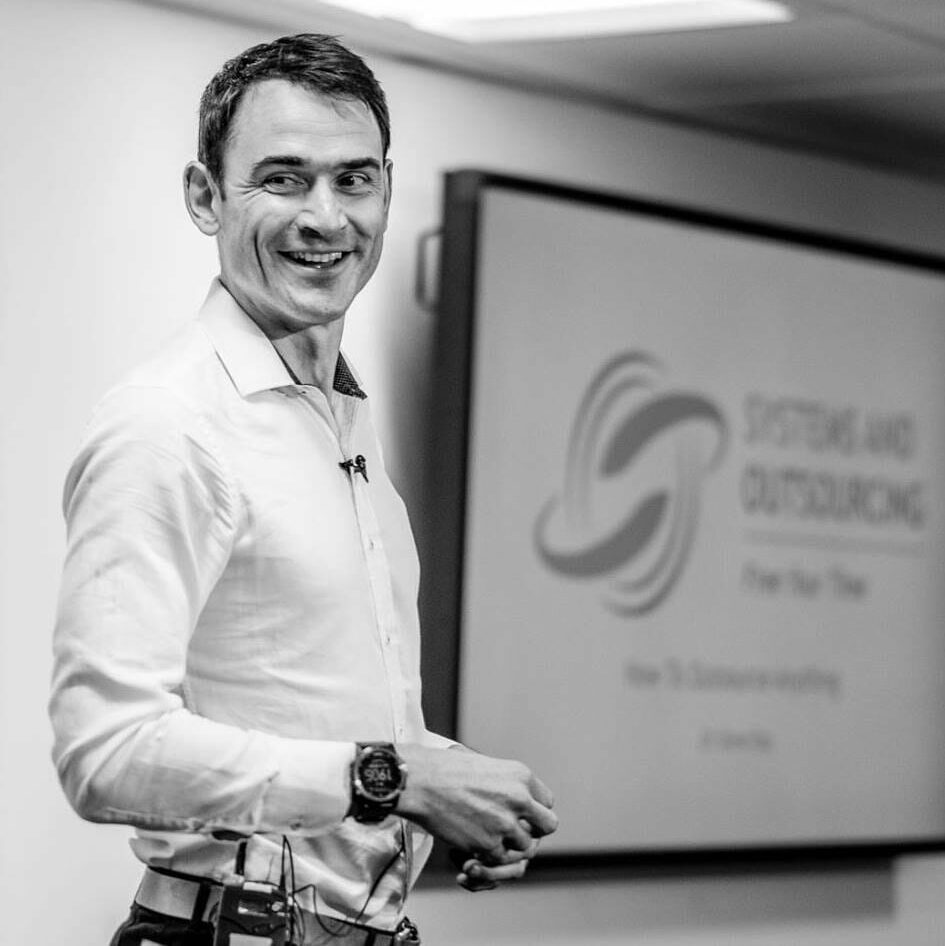
Steve moved to Sweden in 2015 and transformed how he ran his businesses—switching to a fully remote model. A former NHS doctor, with a background in computing and property investing, he now helps overwhelmed business owners systemise and outsource effectively. Additionally, through his courses and coaching, Steve teaches how to automate operations and work with affordable virtual assistants, freeing up time and increasing profits. He runs his UK-based businesses remotely with support from a team of UK and Filipino VAs. He is also passionate about helping others build scalable, stress-free companies using smart systems and virtual support.
For more articles related to hiring operational support, you may also like:
Everything I've learned from hiring over 160 Filipino Virtual Assistants (PART 1)